
Fear Free Certification
Fear Free refers to training programs designed to help veterinary teams, trainers, and pet owners reduce fear, anxiety, and stress in animals. Several members of our team at Park Pet Hospital hold Fear Free® certification.
Fear Free Certification
Fear Free principles outline techniques that can support a calmer experience for pets. As part of the certification process, our team members have completed training on creating a low-stress environment for both cats and dogs.
This includes learning how to identify signs of anxiety or discomfort and adjusting their approach to help pets feel more at ease.
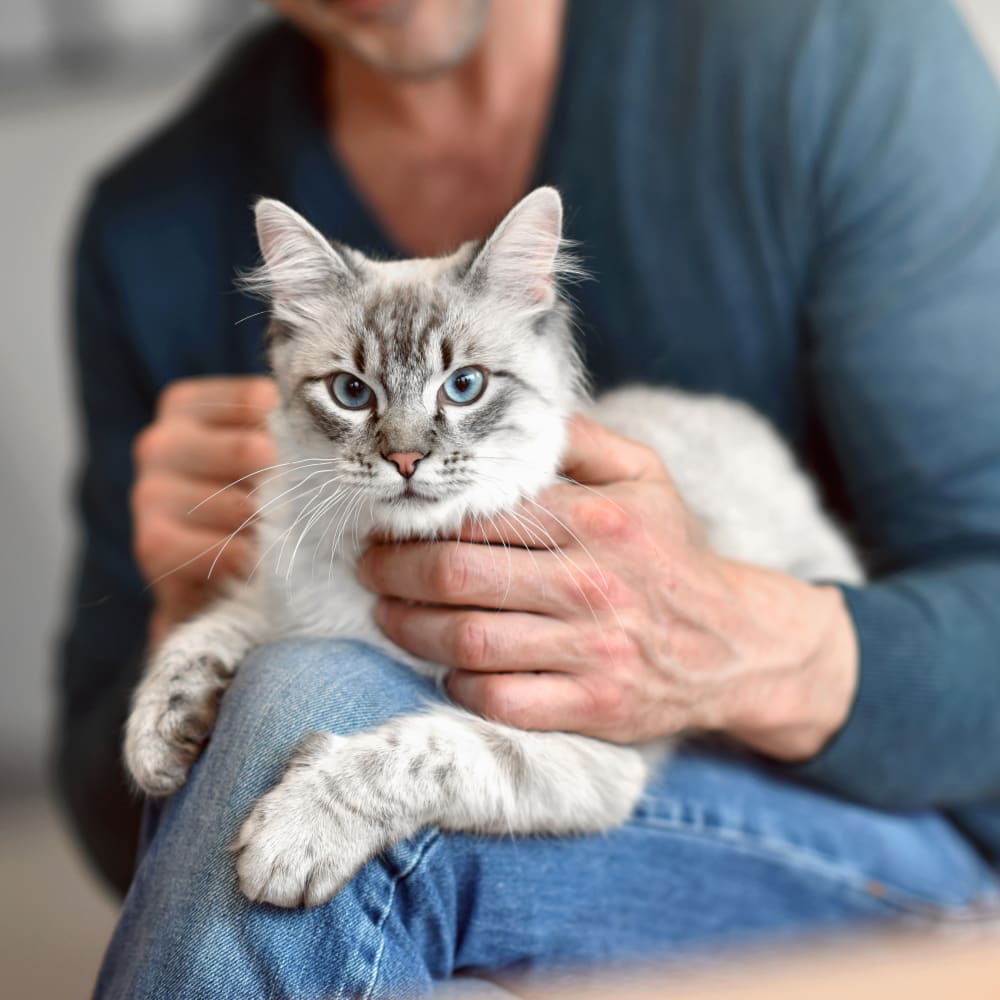
Fear Free Techniques
We want both you and your pet to feel as comfortable as possible during your visit. Incorporating Fear Free® techniques is one of the ways we work toward that goal.
During appointments, we may use items such as treats, mats, and hiding spaces, and we can allow cats to remain in their carriers or dogs to stay close to their owners when appropriate. When needed, we can discuss pre-visit medications and adjust our handling methods to match your pet’s comfort level.
By applying various Fear Free principles throughout your pet’s visit, we aim to support a gentler and less stressful experience for both pets and their owners.
How We Implement Fear Free
Our team has extended the Fear Free principles throughout our hospital and prioritizes them second only to the medical care of our patients.
We work with our patients and their owners to undertake the following steps before and during each appointment:
- Good Communication Between Pets & People
We start by understanding and identifying how pets communicate signs of stress to us.
These signs can include a number of subtle and obvious signals, from a tense expression or dilated pupils to growling, hissing or a tucked tail.
We also will discuss the pet's known stressors with the owner, which can include sounds, scents, discomfort, unfamiliar people, and health status.
Getting to know our canine and feline clients and understanding what stresses them out, and how they communicate that stress, helps us better manage it during their visits.
We ask the family to speak up if there is something that causes fear, anxiety or stress. We can help!
- Planning Ahead
An anxiety-free veterinary appointment starts at home. Let us know if your pet gets stressed going to the vet. We can offer suggestions for things to do at home before the visit, which can include supplements to help with car sickness, or medication to help decrease your pet's stress level.
If your pet gets stressed coming into the lobby or meeting new people or other animals, we can have you wait in the car or in our outside waiting area, and then come directly into the exam room.
Let us know if your pet does better with male or female vets.
Cats and small- to medium-sized dogs should be used to their carriers before the visit. This can be accomplished by leaving the carrier out in an area of the home where the pet likes to be. Place a towel over the top of the carrier to help create a safe place with familiar scents.
The carrier should also be outfitted with toys, and comfortable bedding or a non-slip mat. Carriers that have a top-off option are ideal because they are more accessible.
If transporting a medium to large dog, be sure to use an approved restraint device in the car. The drive to the vet can be kept low-stress with calm music or silence and by avoiding hard stops or starts.
We also suggest bringing your pet's favourite treats or toys to the visit.
- A Calm, Quiet Environment
At Park Pet Hospital, we do our best to keep the atmosphere calm, quiet and positive.
To help reduce your pet's stress in the waiting area, keep cats and dogs separate as much as possible. Cat carriers should be kept off of the floor and placed on a sturdy table or chair. Keep your dog leashed and close to your side to minimize interaction with other waiting pets.
When you arrive, you and your pet will receive a warm and friendly welcome. We want you to know that you are important to us.
As dogs and cats are often sensitive to loud noises and quick movements, during the appointment, our veterinary team will remain calm, speak in quiet voices and approach your pet in a slow, careful manner.
- Treats & Toys
To encourage a positive experience and decrease fear, stress, and anxiety during the visit, rewards such as treats, toys or petting/brushing can be used during an exam or when obtaining diagnostics as long as it is not contraindicated based on why the pet is at the hospital.
We have treats throughout the hospital, but if your cat or dog is on a special diet, or has a particular favourite, we encourage you to bring some with you to the visit.
- Pet Owner Involvement
Families are allowed to be with their pets during examinations, but not during sedation, anesthesia, X-rays and while the hospital is closed. The staff will direct families on how they can play a part in their pet's treatment to ensure lower stress for the animal and to keep staff and family safe during the procedure.
- Sedation & Restraint Options
If your pet needs to be restrained during a procedure, our trained staff may use a towel wrap, a muzzle, or an Elizabethan collar (e-collar) to ensure the patient is safe and comfortable. A mild sedative may be recommended to make sure that the procedure can be performed safely and is less stressful for the patient.
If you already know that your pet experiences anxiety or stress when visiting the vet, it may be helpful for the veterinarian to provide you with a mild sedative to give to your pet at home before to an appointment.
In some cases, we will reschedule a procedure if the pet is too stressed. This allows us to send home medications to be taken before performing the procedures at the next visit.